
Which Dental Implant Procedure Is Right for You?
Losing a tooth is more common than most people realize. And while dental implant procedures have come a long way, the variety of options available today can feel overwhelming if you don’t know where to start.
The good news is that there is likely a solution that fits your situation well. Understanding the main types of tooth replacement options is the first step toward making a confident, informed decision.
What Are Dental Implants?
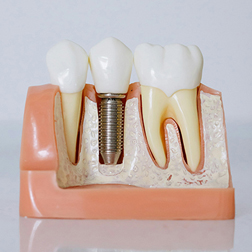
Dental implants are small titanium posts surgically placed into the jawbone to act as artificial tooth roots. Once they integrate with the bone, in a process called osseointegration, they provide a stable, permanent foundation for replacement teeth that look, feel, and function like natural ones.
Unlike dentures or bridges that sit on top of the gum, implants are anchored in the bone itself. That is what makes them the gold standard for tooth replacement: they preserve jawbone structure, support surrounding teeth, and restore full chewing function without the compromises that come with removable options.
Single Tooth Implants
If you are missing one tooth, a single tooth implant is typically the most straightforward and effective solution.
A single titanium post is placed in the jawbone at the site of the missing tooth. After a healing period, a custom crown, matched to the size, shape, and color of your natural teeth, is attached on top. The result is a replacement that is virtually indistinguishable from the real thing.
Single tooth implants also protect neighboring teeth. Unlike a traditional bridge, they don’t require grinding down adjacent healthy teeth to create support, which preserves more of your natural dental structure long term.
Implant-Supported Bridges
When several teeth in a row are missing, an implant-supported bridge may be the right dental implant procedure. Rather than placing an individual implant for each missing tooth, two implants are strategically positioned to anchor a bridge that spans the gap.
This approach replaces multiple teeth with fewer implants while still delivering the stability and bone-preserving benefits that make implants superior to traditional bridgework. It is a particularly good fit for patients who have lost three or more consecutive teeth and have adequate bone density to support implant placement.
Implant-Supported Dentures
Traditional dentures have a well-known limitation: they can slip, shift, and make it difficult or uncomfortable to eat certain foods. Implant-supported dentures solve that problem entirely.
Several implants are placed in the jaw to anchor the denture securely. The denture snaps onto the implants using special attachments, eliminating movement and dramatically improving chewing power and comfort. Implant-supported dentures are available in removable and fixed versions that stay in place permanently.
For many patients, this option restores a level of confidence and function that traditional dentures simply can’t match.
Full Mouth Dental Implants
For patients who are missing all or most of their teeth, full mouth dental implants, often called All-on-Four, offer a complete, permanent solution using just four strategically placed implants to support an entire arch of replacement teeth.
The All-on-Four approach is designed to maximize the use of available bone, which means many patients who have experienced some bone loss may still be candidates without needing additional bone grafting. The result is a fixed, non-removable set of teeth that functions like natural teeth and requires no nightly removal.
For patients who have spent years managing the discomfort and limitations of full dentures, All-on-Four dental implants are often life-changing.
Factors That Help Determine the Right Procedure
There is no one-size-fits-all answer when it comes to dental implant options. The right procedure depends on several individual factors:
- Number of missing teeth: one tooth, several, or a full arch. Each leads to different solutions.
- Location of the missing teeth: consecutive gaps versus scattered missing teeth affects the approach
- Jawbone density and volume: adequate bone is needed to support implants; in some cases, bone grafting may be recommended first
- Overall oral health: gum disease and other conditions need to be addressed before implant placement
- Lifestyle and goals: fixed versus removable options suit different preferences and needs
Why a Consultation Matters
Learning about your options is a good starting point, but the only way to know which dental implant procedure is right for you is through a thorough evaluation with a qualified periodontist.
At Coastal Periodontics, we assess your bone health, review your full dental history, and walk you through every option that makes sense for your specific situation. If you have been living with a missing tooth or struggling with dentures, contact us today.
Make an Appointment Now
Consulting with a dental professional, like Dr. Tredinick at Coastal Periodontics, can provide you with expert guidance and help you make the right decision to restore your smile and oral health.
New Patient Special: Support the Charity of Your Choice
Get a complete exam, X-rays and 3D CT scan all for $295. We’ll create a personalized care plan for the treatment that is best for you, whether the revolutionary Pinhole Technique for gum recession, laser assisted treatment for gum disease, and a variety of implant procedures to replace missing teeth or support dentures. Plus, you’re supporting your community – we’ll donate a portion of your fee goes to the charity of your choice.